


By Ashleigh Owens, Digital Marketing Consultant at BLUE
Google’s October 2026 search update pushes click-throughs from within the answer itself, giving inline links and sources more prominence. After years of shifting our focus from link clicks to brand authority, it could tempt many of us to chase the click over the authority behind it. For B2B, that would be a mistake.
Over the past couple of years, online search has shifted away from driving clicks. Increasingly, people find answers without visiting a website, either on Google’s results page through a featured snippet or AI Overview, or by asking a large language model (LLM) such as ChatGPT, Gemini or Claude.
Recent data backs this up, in June 2026 SparkToro found that across six markets (the UK, US, France, Canada, Italy and Germany) between 62% and 69.5% of Google searches ended without a click.
This shift has fundamentally changed SEO strategies. Ranking well once meant website traffic but now, users often have their answer before they reach your website. The goal has moved from winning the visit, to becoming the source the answer is built on. This reset what success meant for everyone: visibility and authority over clicks. For B2C and e-commerce the returning links are a genuine lifeline, since the click sits close to the sale; for B2B, where trust builds over time, they are no reason to revert to chasing clicks in isolation.
What Google just announced
Some have read Google’s latest update as a turning point. In October, Google announced changes to AI Overviews and AI Mode that move links back up the page. Inline links – the source citations that sit inside the answer itself, so readers can click through as they read – will now show up higher in answers, more often. Google is also testing an “official sources” section at the top of some responses. Other changes make sources easier to see, from news carousels in more countries to thumbnails on related articles.
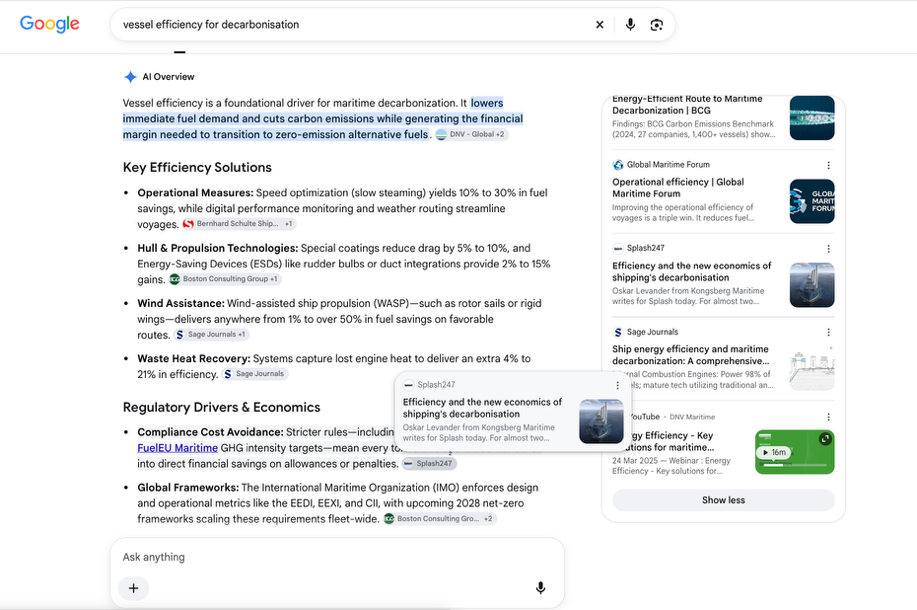
Publishers will welcome this change, and it’s a genuine positive, but it would be a mistake to treat more prominent sources as a reason to go back to chasing clicks.
The shifts in search behaviour behind this took two years to form and are unlikely to unwind over a layout change. For B2B, though, that’s almost beside the point. If the wider strategy is right, clicks follow from it; they were never the goal. A few more clicks shouldn’t change the approach, and chasing them in isolation was never the right one anyway.
Why B2B brands shouldn’t change course
For B2B brands outside e-commerce, this update doesn’t change our strategy, and the reason comes down to what a link is actually worth.
A link with no onward journey, and no web of credibility across earned media and other channels to back it up, is just another signpost. More signposts are welcome, but they only pay off when they point to a brand the user already has reason to trust. For B2B, where authority-building is critical, treating this update as a cue to revert to a “rank-and-click” mentality would be a step backwards.
At BLUE Communications, we’ve never optimised for the sake of it. We make sure structural best-practice is in place, but we stop short of telling a client to pad a page with questions nobody in their market asks, just to rank. Our approach relies on content that genuinely answers the question and adds value. Quality over quantity.
Our focus for our clients has been on building authority on the topics their target audience research. That’s what earns citations in AI Overviews and LLM answers, and it’s what earns the click when someone wants to read further. Picture a fleet manager asking an AI tool about ballast water treatment. If your company is the one being cited, the click follows. Those links reward what they always have: being the most authoritative source on the subject.
This is where PR earns its place in search strategy. Muck Rack found more than 84% of AI citations come from earned and third-party sources (journalism, research and industry bodies) against around 15% from brands’ own sites.
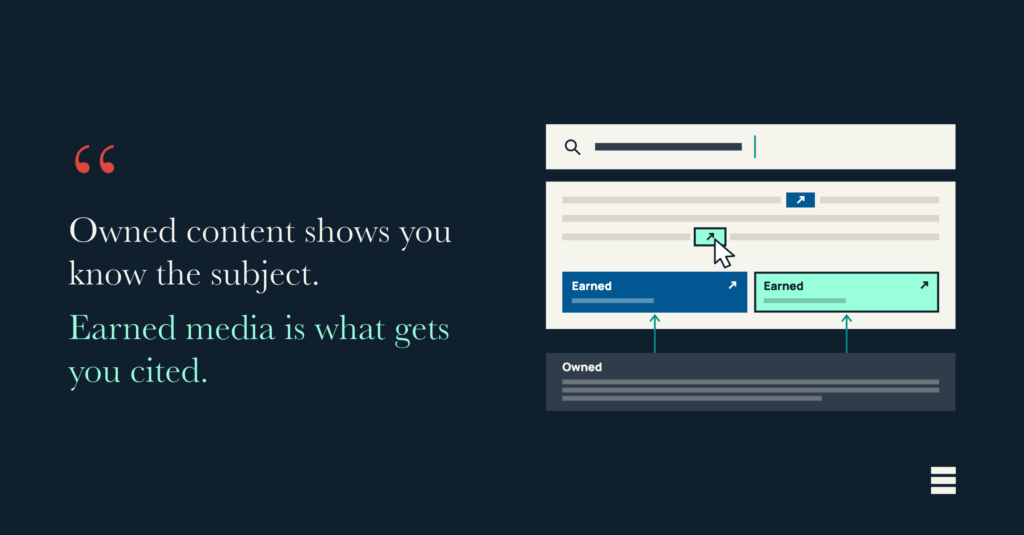
This is also why we treat SEO and GEO as one part of an integrated approach rather than a standalone discipline. PR, brand, insight and digital marketing should work together to build a web of credibility. For brands in niche B2B sectors such as maritime or energy and carbon, don’t fall back to a click-chasing strategy – the real impact is made with an integrated thought-leadership driven strategy that aims for authority over empty click-through.
What this means in practice
The goalposts haven’t moved:
- Understand your market and the questions they’re considering.
- Write for the person asking the question.
- Put your experts in front of the trade press, not just your blog.
- Structure your website, and its content, so search engines and AI tools can read it.
- Measure visibility (mentions, citations, share of voice in AI answers), not just sessions.
If you’d like to see how your brand shows up in AI search today, drop me a line or get in touch with the team at BLUE Communications.